


Quality & Compliance
Chilli Export Quality Standards: Moisture, Sterilization & Packaging Explained
Variety, pungency (SHU), and color (ASTA) get most of the attention when sourcing dry red chilli, but they only describe the pod itself. Whether a shipment actually clears import inspection and holds up through transit comes down to a second set of specifications — moisture, cleanliness, microbial safety, and packaging. Here is what each one means for a buyer.
Moisture Content: The First Number Buyers Check
Export-grade dried chilli is typically specified at a moisture content of not more than 11.0%. Staying under this threshold matters for two reasons: chilli above this range is prone to mould growth and color degradation during a multi-week sea shipment, and moisture is effectively dead weight — buyers paying by weight want that weight to be chilli, not retained water.
Foreign Matter, Broken Chilli & Ash Content
A handful of related specifications describe how clean and intact a lot is:
- Broken chilli — typically capped at not more than 5.0%, since excessive breakage signals rougher handling and affects both appearance and shelf life for whole-pod buyers.
- Total ash (dry basis) — generally not more than 8.0%, a standard indicator of overall mineral and foreign-matter content.
- Ash insoluble in dilute HCl — usually capped at 1.3%, a more specific check for sand and soil contamination that ordinary ash content can miss.
- Insect damaged matter — typically limited to not more than 1.0%, confirming the lot has been properly sorted after drying.
Together, these four numbers give a buyer a fuller picture of processing quality than pungency or color alone.
Steam Sterilization for Microbial Safety
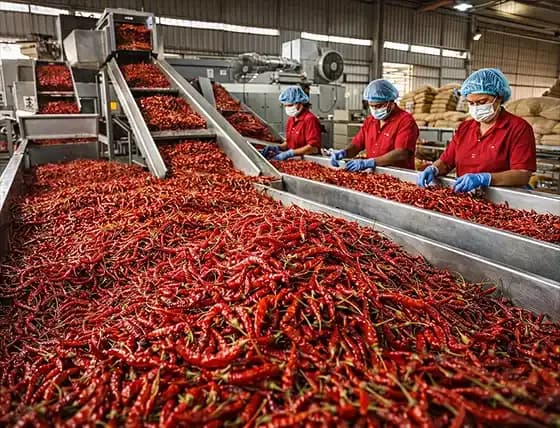
Most importing markets require dried chilli to meet microbial limits before it can clear customs, and steam sterilization has become the preferred way to meet them — it reduces microbial load without the chemical residue concerns associated with fumigants such as ethylene oxide, which are restricted or banned in a growing number of markets. AgroHaat operates integrated steam sterilization capacity of up to 5,000 MT per year alongside cleaning, sorting, and grinding, so sterilization can be built into the same processing run as grading rather than handled as a separate step.
Packaging & Container Loading
Once a lot meets its moisture and cleanliness specification, packaging is what protects it for the rest of the journey. Dried chilli is generally packed in moisture-resistant bags — commonly PP bags with an inner liner — in standard net weights suited to the buyer's handling requirements, and loaded into containers with desiccant or humidity control to prevent condensation from temperature swings in transit. Buyers with a specific packaging format, bag weight, or labeling requirement should confirm it at the time of order, since it is straightforward to accommodate but needs to be set before loading.
A Quick Checklist for Buyers
- Confirm moisture content is specified at or below 11.0%.
- Ask for broken chilli, total ash, and acid-insoluble ash figures alongside the certificate of analysis.
- Check whether steam sterilization is included or needs to be requested separately.
- Confirm packaging format, bag weight, and container loading method before the order is finalized.
For where and when Indian chilli is grown, see our companion guide to Indian chilli crop growing regions and export outlook, and for pungency and color comparisons across varieties, see our guide to Indian red chilli varieties for export.
Need Chilli to a Specific Quality Specification?
Share your moisture, ash, or sterilization requirement and our team will confirm availability against your specification.
Get in Touch