



Crop Insights
Indian Turmeric Crop: Growing Regions, Harvest Season & Export Outlook
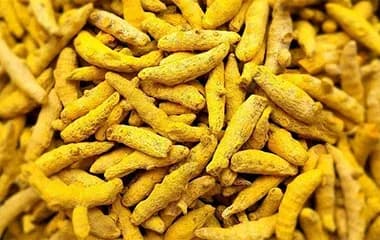
India grows and exports more turmeric than any other country, supplying food processors, nutraceutical companies, and curcumin extractors worldwide. Because turmeric is bought primarily on curcumin content, understanding which regions produce which curcumin range makes sourcing significantly more predictable.
Where India’s Turmeric Is Grown
Turmeric cultivation spans several states, each associated with a distinct curcumin range and finger characteristic:
- Telangana (Nizamabad) — home to India’s largest turmeric trading market, producing double-polished fingers with a lemon-yellow finish.
- Tamil Nadu (Erode) — a major turmeric trading and processing hub, known for bright orange-yellow fingers.
- Maharashtra (Sangli) — a long-established turmeric belt producing the Salem/Sangli type, widely traded across India.
- Andhra Pradesh (Vizag) — deep orange, higher-curcumin turmeric grown in the Vizag belt.
- Meghalaya (Lakadong) — grown in the hill districts of Jaintia, Lakadong turmeric is recognized as one of the highest-curcumin turmeric varieties grown anywhere in the world.
Harvest Season and Availability
Turmeric is a long-duration crop, typically planted with the onset of monsoon (April–June) and harvested eight to nine months later, between January and March. After harvest, the fresh rhizomes are boiled, sun-dried, and — for polished grades — mechanically polished before reaching export-ready form, so export material generally becomes available from February onward through the rest of the year from stored stock.
What Drives Quality and Price Each Season
- Curcumin content — the single most important export specification; it varies by both variety and growing region, and directly determines price for nutraceutical and extraction buyers.
- Rainfall during the growing season — turmeric is sensitive to both drought stress and waterlogging, either of which can affect rhizome size and curcumin development.
- Boiling and drying practices — inconsistent post-harvest processing affects both color and moisture content, both of which matter for export grading.
- Demand from the extraction industry — curcumin extraction for nutraceuticals has become a significant demand driver, and can tighten availability of high-curcumin lots in a given season.
Sourcing Considerations for Export Buyers
Because curcumin content can range from roughly 1.5% in standard grades to over 7% in Lakadong turmeric, the right sourcing decision starts with matching curcumin requirement to end use — culinary and general food-color applications typically use standard-curcumin fingers, while nutraceutical and extraction buyers usually specify high-curcumin material even at a price premium. AgroHaat sources across these growing belts and supplies turmeric as whole fingers, slices, kibbled, or powder.
For a side-by-side comparison of curcumin content across varieties, see our companion guide to Indian turmeric varieties for export.
Looking to Source Turmeric for a Specific Curcumin Range?
Share your target curcumin % and form (whole, sliced, kibbled, or powder) and our team will get back with availability and pricing.
Get in Touch
