


Quality & Compliance
Turmeric Export Quality: Curcumin Testing, Moisture & Steam Sterilization

Turmeric buyers usually lead with one number — curcumin percentage — but a shipment that meets its curcumin target can still run into trouble if the underlying quality assurance behind that number is not in place. Here is what export buyers should confirm beyond the headline specification.
How Curcumin Content Is Verified
HPLC (high-performance liquid chromatography) is the recognized standard method for measuring curcumin content, and it is significantly more precise than older colorimetric estimation methods. Since curcumin percentage is the primary driver of price — ranging from roughly 1.5% in standard culinary grades to over 7% in premium varieties like Lakadong — buyers should ask for an HPLC-based certificate of analysis with every lot rather than relying on a supplier's stated range alone.
Moisture Control Through Drying and Polishing
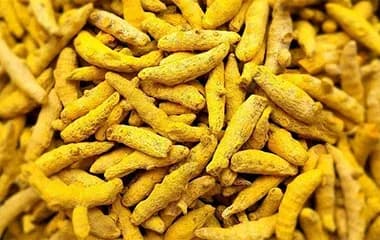
Turmeric is boiled, sun-dried, and — for polished grades such as Nizamabad Double Polished — mechanically polished before it reaches export-ready form. Each of these steps affects final moisture content, and inconsistent drying is one of the more common causes of quality variation between lots of the same variety. Buyers sourcing polished fingers specifically should confirm both the polish grade and the moisture specification, since the two are assessed separately.
Steam Sterilization for Export Compliance
As with most export spices, importing markets generally require turmeric to meet microbial limits before customs clearance, and steam sterilization is the preferred way to meet them without the chemical residue concerns tied to fumigants such as ethylene oxide. AgroHaat operates integrated steam sterilization capacity of up to 5,000 MT per year, so sterilization can be scheduled alongside cleaning and grinding rather than as a separate processing step.
Form Options: Whole, Sliced, Kibbled & Powder
Turmeric is generally available as whole fingers, sliced, kibbled, or powder, and the right form usually depends on end use — whole fingers and slices are common for further processing or retail packing, while kibbled and powder suit direct food manufacturing use. Form can typically be selected independently of the curcumin specification, so it is worth confirming both separately rather than assuming a given form only comes in one curcumin range.
A Quick Checklist for Buyers
- Ask for an HPLC-based certificate of analysis, not just a stated curcumin range.
- Confirm the moisture specification alongside the polish grade for polished fingers.
- Check whether steam sterilization is included or needs to be requested separately.
- Confirm the required form — whole, sliced, kibbled, or powder — at the time of order.
For where and when Indian turmeric is grown, see our companion guide to Indian turmeric crop growing regions and export outlook, and for a curcumin-led comparison across varieties, see our guide to Indian turmeric varieties for export.
Need Turmeric to a Specific Curcumin Range?
Share your target curcumin %, form, and any sterilization requirement and our team will confirm availability.
Get in Touch